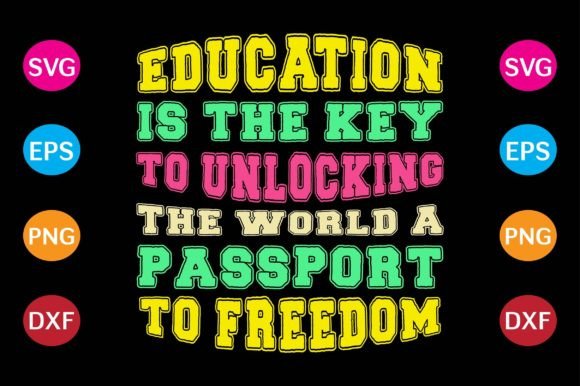
Education is the Key to Unlocking
“Education is the Key to Unlocking” isn’t just a slogan—it’s a visual metaphor with real resonance. When you see a stylized key paired with open books, graduation caps, or abstract learning symbols, it instantly communicates growth, access, and possibility. This design has become a quiet staple in back-to-school season—not as a trend, but as a grounded, meaningful statement that resonates across ages, roles, and intentions.
Where This Design Fits Naturally—Not Just on a T-Shirt
Yes, it works beautifully on a back to school T-shirt—but its usefulness stretches far beyond apparel. Think of it as a versatile visual anchor for moments where learning, transition, or empowerment matters.
- Teachers and school staff use it on custom tote bags or classroom banners to welcome students with warmth and intention—not just “school starts Monday,” but “your potential starts here.”
- Parents and homeschoolers print it on laminated chore charts or weekly planners, turning routine into ritual: each completed task is another turn of the key toward independence and understanding.
- College advisors and academic support centers feature it on handouts, digital newsletters, and orientation slides—subtly reinforcing that education isn’t about checking boxes, but gaining agency.
- Youth mentors and nonprofit programs apply it to stickers and notebooks handed out during workshops—small, tangible reminders that knowledge builds confidence, not just credentials.
Why the File Formats Matter—Especially If You’re Cutting, Printing, or Repurposing
You’ll receive this design in SVG, PNG (300 dpi), EPS, and DXF—not just as a courtesy, but because each format serves a distinct purpose in real-world creation:
- SVG is your go-to for web use, digital classrooms, or resizing without pixelation—perfect if you’re building an online orientation module or designing a Canva newsletter.
- PNG at 300 dpi gives crisp, print-ready clarity for iron-on transfers, poster prints, or high-res invitations—no blurry edges when it’s going on a bulletin board or a parent welcome packet.
- EPS is ideal for professional printers or vector-based editing in Adobe Illustrator—useful if you're adapting the design for school letterhead or a district-branded presentation deck.
- DXF is what makes this truly hands-on: it’s the language your Cricut, Silhouette, or other cutting machine understands. Whether you’re layering vinyl on a reusable lunchbox or etching the key motif onto a wooden bookmark, DXF ensures clean, precise cuts every time.
That range means you’re never stuck choosing between “good enough for Instagram” and “good enough for production.” It’s built for doing—not just displaying.
Real Situations Where This Design Solves a Small but Meaningful Problem
Consider these everyday moments—and how “Education is the Key to Unlocking” quietly shifts the tone:
- A middle school counselor prepping for IEP meetings: She adds the design to a simple one-page handout titled “What Your Child’s Strengths Unlock.” Not flashy—just clear, hopeful, and centered on capability instead of gaps.
- A community college instructor launching a first-gen student cohort: He uses the SVG file to animate the key turning in a short welcome video—no voiceover needed. The motion says it all: learning opens doors you didn’t know were there.
- A parent organizing a “supply swap” before fall term: She prints the design on sticker sheets (using the 300 dpi PNG) and puts one on each donated backpack. It transforms a practical exchange into a shared value—learning as something we carry together.
- A craft studio hosting a “Back to Creativity” workshop for adults: They cut the key shape from metallic vinyl (via DXF + Cricut) and press it onto journals. For participants returning to art after years, it’s not nostalgia—it’s permission to begin again.
Who Benefits—and How Their Needs Shape the Use
The beauty of this concept is how flexibly it adapts to different priorities:
- Educators lean into its symbolic weight—using it to soften institutional language, reinforce inclusive pedagogy, or mark milestones like literacy night or STEM fair.
- Small business owners (think tutoring studios, test prep centers, or educational toy shops) use it to signal values—not just services. A mug with this design on the counter tells families, “We’re here for growth, not just grades.”
- Creative parents and caregivers appreciate how easily it layers into daily life: ironed onto a favorite shirt for picture day, cut into felt for a sensory learning kit, or scaled down as a watermark on a printable reading log.
- Adult learners returning to school often find deep personal meaning in it—not as a cliché, but as a quiet affirmation. One nursing student told us she stitched the key motif onto her scrubs pocket. “It’s my reminder that every lecture, every clinical hour, is turning something real.”
Things to Keep in Mind Before You Start Creating
While the design is flexible, thoughtful use makes all the difference:
- Context shapes meaning. On a preschool t-shirt, pair it with playful fonts and soft colors. On a university alumni event banner, opt for clean lines and muted tones—same idea, different resonance.
- Don’t overcomplicate it. This phrase gains strength from simplicity. Avoid stacking too many icons (gears, lightbulbs, globes) around the key—let the metaphor breathe.
- Accessibility matters—even in design. If printing for classroom use, ensure contrast is strong (e.g., dark key on light background) and avoid relying solely on color to convey meaning.
- Know your machine’s limits. DXF files work beautifully with most cutting tools—but double-check line thickness settings in Silhouette Studio or Cricut Design Space if you’re using intricate versions. Sometimes simplifying paths saves time and material.
What This Design Does Well—and Where It Leaves Room for You
Its greatest strength? It doesn’t tell people what to learn—it affirms why learning matters. It sidesteps pressure and performance, landing instead on access, curiosity, and self-determination. That’s why it feels authentic whether worn by a kindergartener holding their first library card or a 45-year-old starting night classes in data analytics.
It won’t replace lesson plans or solve systemic inequities—and it’s not meant to. What it does offer is a consistent, adaptable, human-centered visual thread: one you can hold up, stitch on, cut out, or share—without explanation—because the message lands where it’s needed most.