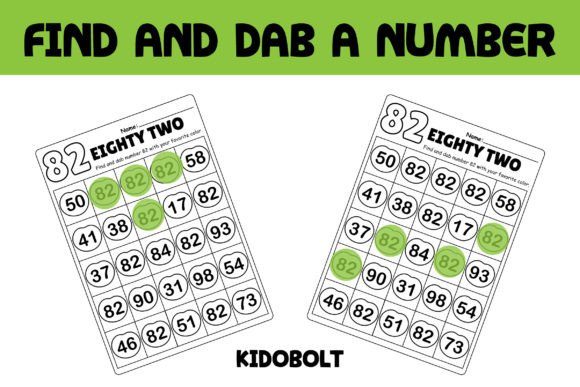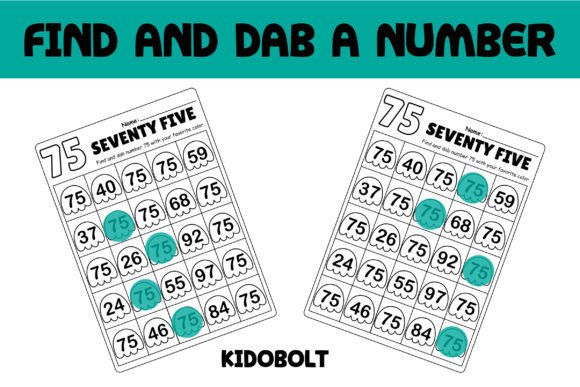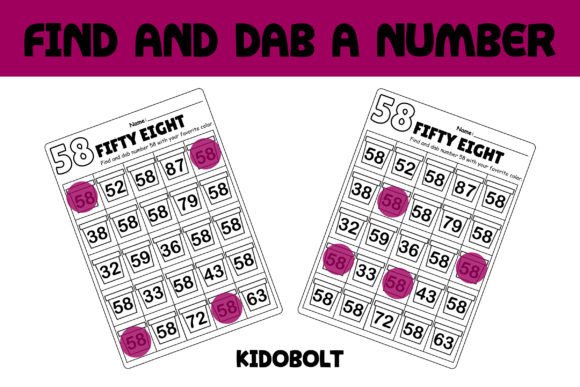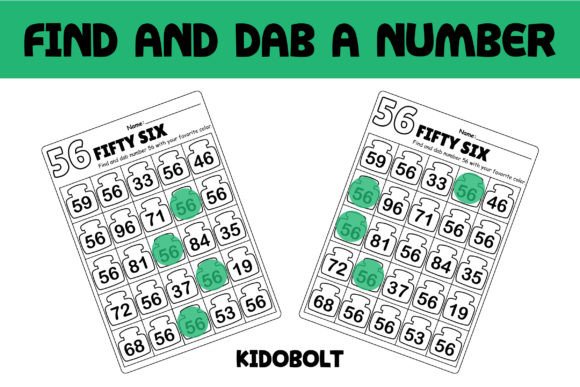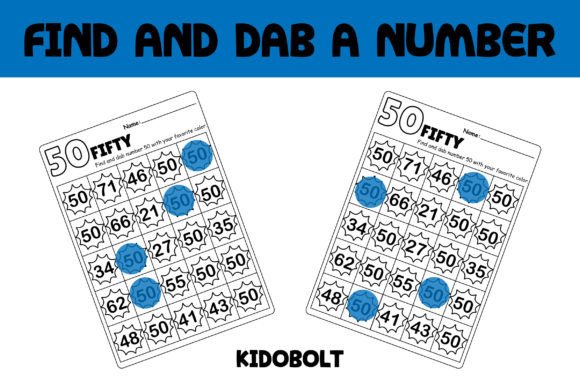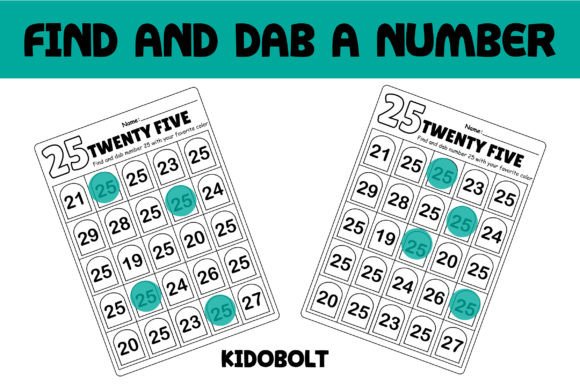
PreK Dab a Dot Number Worksheet - 25
If you’ve ever watched a preschooler light up at the *pop* of a dabber—or seen a kindergartner pause, count carefully, and proudly cover each number with bright color—you already know why the PreK Dab a Dot Number Worksheet - 25 works. It’s not just another printable. It’s a low-prep, high-engagement tool built around how young children actually learn: through movement, repetition, sensory input, and joyful choice.
This JPG file—300 DPI, crisp and print-ready—is designed for one clear purpose: helping kids recognize, name, and associate quantities with numerals 1 through 25. But its usefulness stretches far beyond counting practice. Whether you're a kindergarten teacher setting up your first week of school, a homeschool parent juggling screen time limits, or a speech-language pathologist supporting early numeracy in therapy sessions, this worksheet meets real needs—in real time.
Where it fits—and why timing matters
Start-of-year assessment is one of the most practical uses for the PreK Dab a Dot Number Worksheet - 25. Instead of formal testing, hand out the sheet during morning tubs or small-group rotations. Watch how a child responds to “Find the number 12” or “Dab all the 7s.” You’ll quickly spot who confidently scans rows, who counts aloud from 1 each time, and who hesitates at teens—a subtle but critical insight before planning differentiated instruction.
At home, it’s equally grounded in daily reality. Think: rainy afternoon energy needing redirection, a sibling duo needing parallel-but-separate tasks, or a child who shuts down during pencil-and-paper drills but lights up with texture and color. The tactile feedback of pressing a dabber (or a pompom, sticker, or stamp) builds neural connections differently than tracing or writing alone—and that difference shows up in retention.
More than dabbing: flexible tools for varied learners
The magic isn’t locked into one tool. Yes, dabbers are popular—but flexibility is built in. Try these real-world swaps based on what’s on hand or what fits your learner:
- Decorative stamps — Great for fine motor development and adding pattern recognition (e.g., star stamp for even numbers, heart for odds)
- Dry-erase markers + laminated sheets — Perfect for centers or travel; wipe clean and reuse weekly
- Pompoms or buttons — Adds pinch-and-place practice for pincer strength, especially helpful for kids still developing handwriting readiness
- Stickers — A natural fit for reward-based routines or as part of a “number of the day” calendar activity
One special ed teacher shared how she uses the PreK Dab a Dot Number Worksheet - 25 alongside verbal prompts (“Which one is bigger—14 or 19?”) and simple comparison language. Another used it in a bilingual preschool by labeling each number in both English and Spanish before dabbing—turning numeral ID into vocabulary reinforcement.
Who benefits—and how it shows up in action
Educators appreciate the quiet focus it encourages during independent work time—no cutting, no glue, minimal cleanup. It also scaffolds naturally: start with numbers 1–10, then layer in 11–20, then tackle 21–25 as confidence grows. You’ll notice fewer “I don’t know” responses and more self-correction when kids compare their dabs to a number line or chart nearby.
Parents and caregivers value how easily it adapts to attention spans. A 4-year-old might complete three numbers before wandering off—and that’s okay. The next day, they return to where they left off, building familiarity without pressure. One mom told us she prints two copies: one for dabbing, one for her to circle errors gently so her daughter can try again without erasing or frustration.
Creative entrepreneurs and content creators use this worksheet as a base for themed learning kits—think “Ocean Numbers” (blue dabbers + fish stickers) or “Back-to-School Supply Counting” (pencil-shaped stamps). Because it’s high-resolution JPG, it drops cleanly into Canva, Etsy listings, or digital planners without pixelation.
What to consider before using it
It’s not a one-size-fits-all fix—and that’s good. Before printing or assigning, ask yourself:
- What’s my goal right now? If it’s pure numeral recognition, great. If you’re targeting counting *by tens*, you’ll want to supplement with other materials.
- Do I have the right tools on hand—or can I swap them meaningfully? A child who finds dabbers overwhelming may thrive with soft fabric buttons instead.
- Is this part of a larger routine? Pairing it with a short song (“The Number Train” or “Count to 25”) or a quick physical movement (“Jump 8 times!”) helps anchor learning in multiple ways.
Also keep in mind: while the worksheet supports number identification, it doesn’t explicitly teach formation or place value. That’s intentional—and why many users pair it with whiteboard practice or number tiles later in the week.
Real outcomes—not just busywork
Over time, consistent, playful use of the PreK Dab a Dot Number Worksheet - 25 leads to observable shifts: kids begin pointing to numbers unprompted in books or environmental print; they correct peers during circle time (“That’s 16, not 60!”); they choose number puzzles or dice games more often during free play. These aren’t abstract milestones—they’re signs that numeracy is becoming intuitive, not instructional.
And because it’s rooted in doing—not just watching or listening—it doubles as a subtle motor skills builder. Pressing down, aiming precisely, switching hands, coordinating eye-hand movement—all happen naturally, without drilling.
Share what you make—because ideas grow when they’re seen
Did you turn the PreK Dab a Dot Number Worksheet - 25 into a classroom bulletin board? Laminate and hang it as a hallway number walk? Add Velcro dots for a special needs station? Snap a photo. Post it. Tag others who might need that exact spark. Real examples—like a toddler using chunky foam stickers to dab while naming each number aloud—do more to inspire than any description ever could.
This isn’t about perfection. It’s about presence—showing up with a tool that meets kids where they are, supports how they learn, and leaves room for joy in the process. That’s why, year after year, educators reach for it in August, parents save it for winter break, and therapists keep it in their go-bag. Because sometimes, the simplest things—like pressing a dot on the number 17—make the biggest difference.