Be So Good They Can’t Ignore You: A Practical Guide to Design Files for Back-to-School Projects
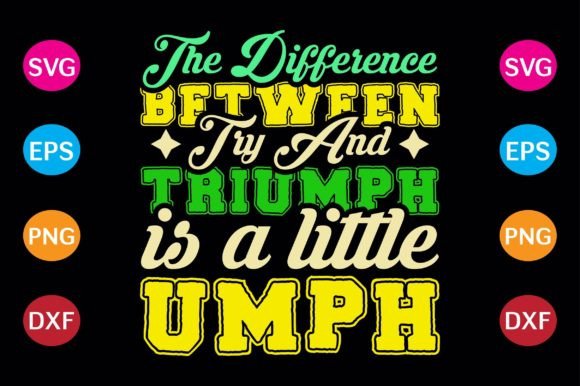
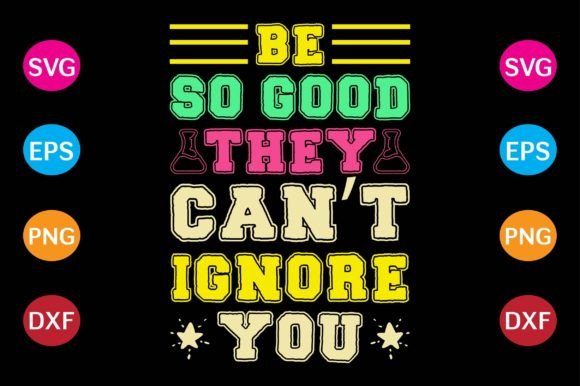
“Be so good they can’t ignore you” isn’t just a motivational phrase—it’s a mindset rooted in deliberate practice, skill-building, and tangible output. When applied to creative design resources—especially those tailored for back-to-school season—it signals something concrete: a set of high-fidelity, production-ready files built for real-world use. This article explores what makes the Be So Good They Can’t Ignore You back-to-school T-shirt design distinct—not as hype, but as a functional asset—and how it fits alongside other design options you might be evaluating.
What “Be So Good They Can’t Ignore You” Actually Delivers
This design isn’t a single image or a low-resolution JPEG. It’s a multi-format digital package—including SVG, PNG at 300 dpi, EPS, and DXF—that supports precision cutting, scalable printing, and flexible adaptation. Each format serves a specific purpose:
- SVG: Ideal for web use, Cricut Design Space, and Silhouette Studio; retains vector clarity at any size and supports layering and color separation.
- PNG (300 dpi): Optimized for print-on-demand services, screen printing mockups, and high-res physical outputs like posters or framed artwork.
- EPS: Industry-standard vector format compatible with Adobe Illustrator, CorelDRAW, and professional print shops—especially useful when editing paths or preparing for large-format prints.
- DXF: Enables compatibility with CNC routers, laser cutters, and some industrial-grade vinyl cutters—making it viable beyond apparel, into wood signs, acrylic decor, or classroom tools.
Together, these files form a cross-platform foundation—not just for t-shirts, but for stickers, tote bags, pillow covers, mugs, greeting cards, scrapbook elements, and even classroom bulletin board displays. That breadth matters: if your goal is to create cohesive back-to-school materials across multiple mediums, having one source file that adapts cleanly saves time, reduces scaling artifacts, and avoids re-tracing or redrawing.
How It Compares to Other Design Options
Not all back-to-school designs offer this level of technical readiness. Many free or budget-friendly downloads provide only PNGs—often at 72 dpi—which pixelate when enlarged or fail to separate cleanly for vinyl cutting. Others deliver SVGs without embedded layers or editable text, limiting customization. In contrast, the Be So Good They Can’t Ignore You files are structured for usability: fonts are outlined where appropriate, colors are grouped logically, and negative space is preserved for weeding (critical for iron-on vinyl projects).
Compared to custom illustration services, this option trades bespoke personalization for immediacy and cost efficiency. A freelance designer may craft something uniquely aligned with your school’s mascot or curriculum theme—but that process typically takes days, involves revisions, and starts at $150+. Here, you get a polished, classroom-appropriate phrase—timeless in tone, clean in execution—with full technical flexibility, ready to download and use within minutes.
It also differs from subscription-based design libraries (e.g., Creative Market bundles or Canva Pro templates). Those offer volume and variety, but often require ongoing fees, impose usage restrictions, or embed watermarks unless upgraded. This is a one-time acquisition: no recurring costs, no attribution requirements, and no platform lock-in.
Strengths and Real-World Fit
The strength of Be So Good They Can’t Ignore You lies in its balance of simplicity and utility. The phrase itself resonates broadly—it works for students, teachers, homeschoolers, and staff—without leaning into trends that date quickly (think: “Class of 2024” or meme-style slang). Its typography is legible at small sizes (for stickers or name tags) and impactful at large scales (for banners or wall decals).
Practically, educators report using these files in three common ways:
- Classroom branding: Printing on canvas bags for supply kits, applying to laminated name badges, or cutting vinyl for whiteboard headers.
- Student engagement tools: Turning the design into printable reward stickers, journal cover inserts, or interactive bulletin board letters.
- Personalized apparel: Cutting heat-transfer vinyl for teacher appreciation shirts, student leadership tees, or parent volunteer gear—all with consistent quality across batches.
Because the files support both manual and machine-assisted workflows, they suit users across experience levels—from beginners using a Cricut Joy to seasoned makers running a Glowforge or Roland cutter.
Tradeoffs and Limitations to Consider
No design resource fits every need—and that’s worth acknowledging upfront. If your project requires photorealistic imagery, complex gradients, or layered textures (e.g., chalkboard backgrounds or hand-drawn doodles), this vector-based phrase design won’t meet that need. It’s intentionally minimal: strong typography, intentional spacing, and clean lines—not illustrative storytelling.
Similarly, while the phrase is inclusive and widely applicable, it doesn’t speak to specific identities, subjects, or roles. A biology teacher might prefer “Lab Coat Required,” or an art room might lean toward “Make Mess, Make Meaning.” In those cases, customization—or pairing this file with complementary icons (like a pencil, apple, or graduation cap)—becomes necessary.
Another consideration: licensing. While this package grants broad personal and small-business use (including resale on physical items you make yourself), it does not include rights to resell the digital file itself or distribute it as part of a template library. That’s standard for most standalone design assets—but worth verifying if your use case involves digital redistribution.
When It’s the Right Choice—and When to Look Elsewhere
This design shines when you value consistency, speed, and technical reliability over novelty or niche specificity. It’s especially well-suited for:
- Educators building reusable classroom systems across multiple years;
- PTA groups or school stores producing branded merchandise on a budget;
- Small-batch creators who sell handmade goods and need predictable, printer- and cutter-ready files;
- Homeschool families wanting coordinated learning supplies without hiring a designer.
Conversely, if your priority is highly visual differentiation—say, matching a school’s exact Pantone colors, integrating a custom mascot, or generating social-media-ready animated versions—then working with a graphic designer or exploring editable Canva templates (with proper licensing) may better serve your goals.
Also consider your workflow tools. If you primarily use mobile apps like Cricut Design Space or Silhouette Go, the included SVG and DXF will integrate seamlessly. But if your setup relies heavily on raster-based tools like Photoshop for texture overlays or photo compositing, the PNG version gives you a solid starting point—though you’ll lose vector scalability in those edits.
Making an Informed Decision
Ultimately, choosing a back-to-school design isn’t about finding the “best” file—it’s about matching capabilities to your actual use case. Ask yourself:
- What machines or software do I actually use—and which formats do they require?
- How many different physical products am I planning to make? (More variety increases the value of multi-format access.)
- Do I need to modify colors, spacing, or layout—or is a finished, balanced composition sufficient?
- What’s my timeline? Is immediate usability more valuable than long-term customization potential?
Be So Good They Can’t Ignore You answers those questions with practicality: it’s a thoughtfully prepared, technically sound resource—not a shortcut, but a reliable foundation. Whether you’re prepping for the first day of class or building a small creative business around education, its utility comes not from flash, but from fidelity, flexibility, and quiet competence.